

What is film grain?
Grain is not something added to a photograph. It is what the photograph is made of — silver scattered through the emulsion, one particle for every piece of light that landed.
What film grain actually is
Film is a strip of plastic coated with an emulsion, and suspended in that emulsion are millions of light-sensitive silver halide crystals. When light hits a crystal it changes, and development turns the changed ones into solid metallic silver. The dark parts of a developed negative are not a dark substance spread evenly across the frame. They are grains of silver, each one a particle that caught light.
Grain is not sitting on top of the picture. It is the picture — the individual particles that recorded the light, seen close enough to tell them apart.
Colour film works the same way to begin with, then goes further. Dye clouds form around each developed grain, and the silver is bleached away at the end, leaving only the dye. So what you see as grain in a colour photograph is really the structure of those dye clouds — softer at the edges than a silver grain, which is a large part of why colour grain and black-and-white grain look so different even at the same film speed.
Why some film is grainier than others
A film's sensitivity comes from the size of its crystals. A bigger crystal presents a bigger target and needs less light to register, so fast film is made with coarse crystals and slow film with fine ones. Speed and grain are not two separate qualities you can pick independently. They are the same decision, described from two directions.
| Film | Speed | Grain | Usually shot for |
|---|---|---|---|
| Fujifilm Velvia 50 | ISO 50 | Extremely fine | Landscape, product |
| Kodak Portra 400 | ISO 400 | Fine for its speed | Portraits, weddings |
| Kodak Tri-X 400 | ISO 400 | Pronounced, sharp-edged | Documentary, street |
| Ilford HP5 Plus 400 | ISO 400 | Pronounced, softer than Tri-X | Street, reportage |
| Ilford Delta 3200 | Around ISO 1000 | Very coarse | Concerts, low light |
| Kodak T-MAX P3200 | Around ISO 800–1000 | Very coarse | Night, indoor sport |
The two 3200 films are worth a note, because the number on the box is not their actual sensitivity. The P in T-MAX P3200 stands for push. Both films sit closer to ISO 1000 when measured, and are built to be pushed to 3200 in development rather than to deliver it straight. Which brings us to the thing that changes grain more than the film choice does.
Push processing: grain on purpose
Pushing means deliberately underexposing — loading 400 film and shooting it as though it were 1600 — then leaving it in the developer far longer than normal to compensate.
The compensation is partial, and that is the whole point. Extra development cannot put back detail the film never recorded, so the shadows stay empty. What it does do is drive the midtones and highlights much harder. You end up with high contrast, shadows blocked to solid black, highlights close to blown, and grain considerably coarser than the same film developed normally.
Pushing does not make film more sensitive. It makes an underexposed frame usable, and charges you in shadow detail, contrast and grain. A trade, not a free upgrade.
That combination — heavy grain, blocked blacks, blown highlights — is the look of concert photography, late-night reportage, gig flyers and record sleeves. It reads as urgent and unposed because historically it was: nobody pushed film for fun, they pushed it because there was not enough light and the picture mattered more than the grain.
Adding grain to your photo in the browser
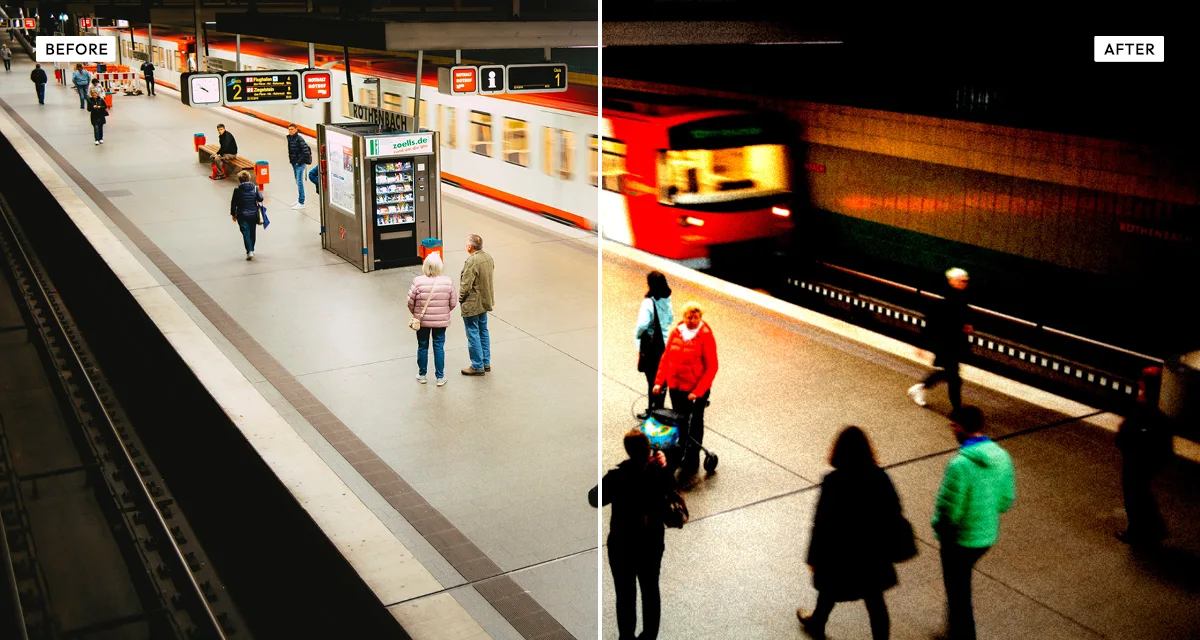
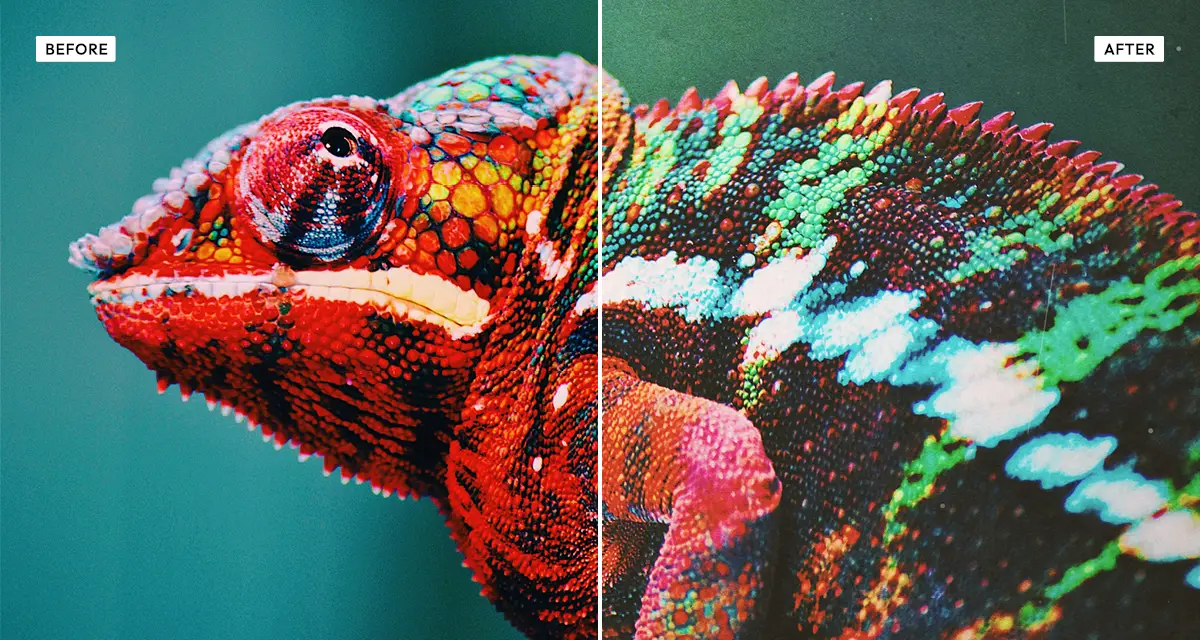
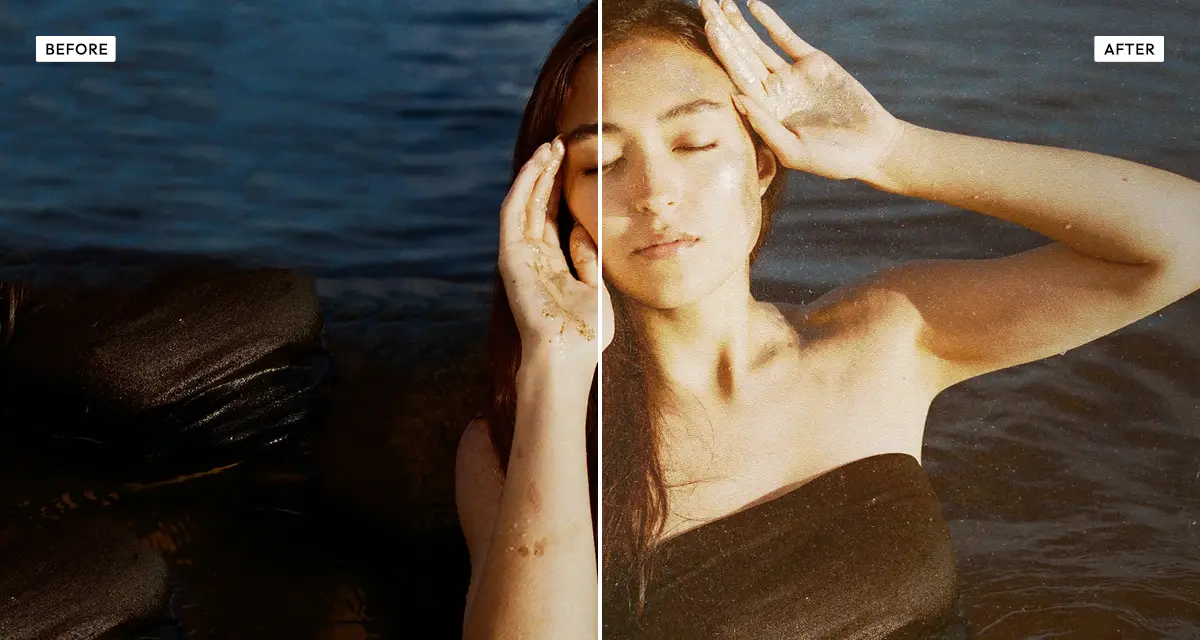
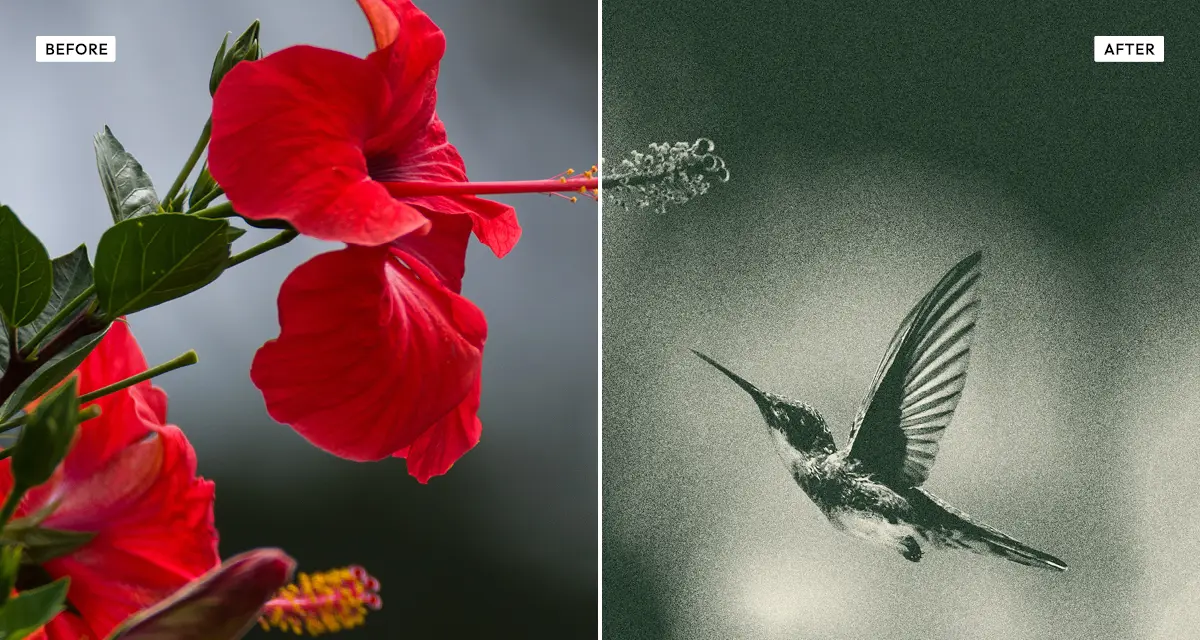
Several of the effects here include grain, and they are not interchangeable — each is copying a different process. The thumbnails show the same photograph before and after, so you can judge them by eye.
-
 Grainy Film Poster
The push-processed look in full: heavy grain, blocked blacks, blown highlights. The closest thing here to a roll of Tri-X shot at 1600.
Try the effect
-
 Retro Analog Film
Grain at normal development, with the light leaks and halation of a working film camera rather than a darkroom decision.
Try the effect
-
 Polaroid
The fine grain and dust of instant film, which is a low-contrast medium by nature — the gentlest of the group.
Try the effect
-
 Vintage
Grain layered underneath scanned paper and wear, for a print that aged as an object rather than a frame shot on fast film.
Try the effect
-
 Risograin
A different lineage altogether: the coarse, single-ink grain of a risograph duplicator rather than anything photographic.
Try the effect
Two things worth knowing whichever you pick. Lift the black point before you touch the grain — grain over pure black is invisible, and most of what reads as a film look is the lifted shadow, not the texture. And grain size matters at least as much as grain amount: a small amount of coarse grain looks like film, while a large amount of fine grain mostly looks like a slightly dirty sensor.
Film grain and digital noise are different things
They get talked about together because both put texture where you might have expected smoothness, but they come from different places.
Grain is physical structure — particles of silver, or clouds of dye, distributed irregularly but evenly through the frame. In black-and-white film it affects brightness only. Digital noise is electronic: partly the random arrival of light itself, partly the sensor's own read noise. It concentrates in the shadows rather than spreading evenly, and it usually carries a colour component, which is why pushed digital files show coloured speckling in dark areas where pushed film simply shows more texture.
That evenness is most of why one tends to be described as character and the other as a problem.
How grainy a photo looks depends on how big it is
Grain has a fixed physical size on the negative, and a 35mm frame is only 36 by 24 millimetres. Everything you have ever seen of that frame was enlarged. Print it at A3 and you are magnifying it around twelve times, and the grain is unmistakable. Contact print the same negative at its native size and you will not see grain at all, because you are looking at something the width of your thumb.
There is no such thing as how grainy a film is, only how grainy it is at the size you are looking at it.
The same holds for a grain effect applied digitally. Grain is fine, high-frequency detail, and shrinking an image is a process of averaging neighbouring pixels together — which is exactly the detail that gets averaged away first. A setting that looks right on a full-size export can vanish almost entirely by the time the same picture is scaled down to a few hundred pixels. If the result is destined for print or for a large export, judge the grain at full size rather than at preview size, because those are genuinely two different pictures.
For the wider set — fade, paper texture, scratches and the rest of what ages a photograph — the old and vintage collection covers how the pieces fit together, and street photography effects covers the harder, higher-contrast end where pushed film belongs.
Frequently asked questions
What is film grain?
Grain is the silver particles that make up a developed photograph. Film emulsion holds light-sensitive silver halide crystals, and development turns the ones that caught light into solid metallic silver. The texture you see is those individual particles. In colour film the silver is bleached away at the end and dye clouds are left behind, so colour grain is the structure of the dye rather than the metal.
Why is high ISO film grainier?
Because sensitivity comes from crystal size. A larger crystal needs less light to register, so fast film is made with coarse crystals and slow film with fine ones. ISO 50 film is almost grainless and ISO 3200 film is openly textured, and that is the same property described twice.
Is film grain the same as digital noise?
No. Grain is physical structure spread fairly evenly through the frame, and in black-and-white film it affects brightness only. Digital noise is electronic, concentrates in the shadows, and usually carries coloured speckling. The evenness is most of why grain is described as character and noise as a fault.
Does push processing add grain?
Yes, noticeably. Pushing means underexposing on purpose and over-developing to compensate, which cannot recover shadow detail that was never recorded but does drive the midtones and highlights hard. The result is more contrast, blocked blacks and coarser grain than the same film developed normally.
Why does grain disappear when I make the image smaller?
Grain is fine, high-frequency detail, and resizing an image averages neighbouring pixels together, which removes that kind of detail first. The same is true of film: a 35mm negative shows obvious grain at A3 and none at all contact printed. Judge grain at the size the picture will actually be used, because a small export and a full-resolution one are two different pictures.
How do I create a film grain effect on my photo online?
Open any of the grain effects here, load your photo and adjust the grain controls — it runs in the browser with nothing uploaded. Grainy Film Poster gives the heaviest, push-processed grain, Retro Analog Film gives grain at normal development, Polaroid the fine grain of instant film, Vintage grain under paper texture and wear, and Risograin the coarse single-ink grain of a duplicator.
Which effect gives the strongest film grain?
Grainy Film Poster. It reproduces push-processed film, so it combines heavy grain with blocked shadows and blown highlights rather than adding texture on its own. For grain at normal development try Retro Analog Film, and for the gentlest version try Polaroid.
Where grain fits with everything else
Grain is only one of the three things that age a photograph. The other two are faded colour and physical wear on the print itself, and they arrive for different reasons over different timescales. The old and vintage collection compares seven effects by which of those layers each one actually reproduces, which is the quickest way to rule out the ones you do not want.